
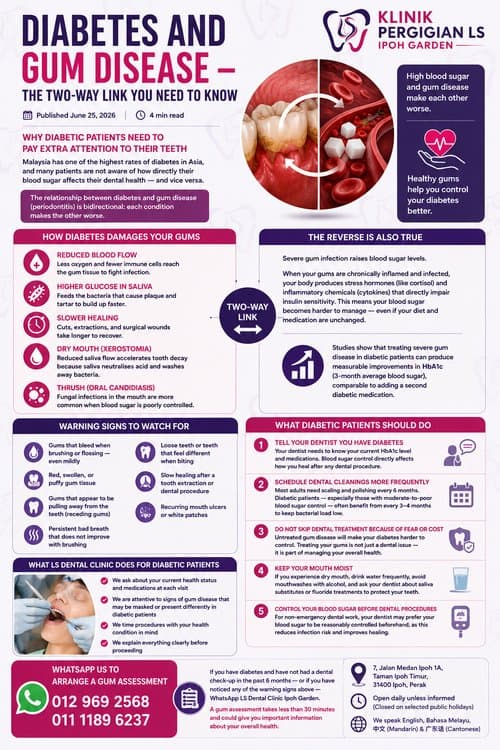
Why Diabetic Patients Need to Pay Extra Attention to Their Teeth
Malaysia has one of the highest rates of diabetes in Asia, and many patients are not aware of how directly their blood sugar affects their dental health — and vice versa.
The relationship between diabetes and gum disease (periodontitis) is bidirectional: each condition makes the other worse.
How Diabetes Damages Your Gums
High blood sugar creates a difficult environment for your mouth in several ways:
- Reduced blood flow to the gums means less oxygen and fewer immune cells reach the tissue to fight infection
- Higher glucose in saliva feeds the bacteria that cause plaque and tartar to build up faster
- Slower healing — cuts, extractions, and surgical wounds take longer to recover
- Dry mouth (xerostomia) — many diabetic patients have reduced saliva flow, which accelerates tooth decay because saliva normally neutralises acid and washes away bacteria
- Thrush (oral candidiasis) — fungal infections in the mouth are more common when blood sugar is poorly controlled
The Reverse Is Also True
This is the part many patients are not told: severe gum infection raises blood sugar levels.
When your gums are chronically inflamed and infected, your body produces stress hormones (like cortisol) and inflammatory chemicals (cytokines) that directly impair insulin sensitivity. This means your blood sugar becomes harder to manage — even if your diet and medication are unchanged.
Studies show that treating severe gum disease in diabetic patients can produce measurable improvements in HbA1c (3-month average blood sugar), comparable to adding a second diabetic medication.
Warning Signs to Watch For
Diabetic patients should be alert to:
- Gums that bleed when brushing or flossing — even mildly
- Red, swollen, or puffy gum tissue
- Gums that appear to be pulling away from the teeth (receding gums)
- Persistent bad breath that does not improve with brushing
- Loose teeth or teeth that feel different when biting
- Slow healing after a tooth extraction or dental procedure
- Recurring mouth ulcers or white patches
What Diabetic Patients Should Do
1. Tell your dentist you have diabetes
Your dentist needs to know your current HbA1c level and medications. Blood sugar control directly affects how you heal after any dental procedure.
2. Schedule dental cleanings more frequently
Most adults need scaling and polishing every 6 months. Diabetic patients — especially those with moderate-to-poor blood sugar control — often benefit from every 3–4 months to keep bacterial load low.
3. Do not skip dental treatment because of fear or cost
Untreated gum disease will make your diabetes harder to control. Treating your gums is not just a dental issue — it is part of managing your overall health.
4. Keep your mouth moist
If you experience dry mouth, drink water frequently, avoid mouthwashes with alcohol, and ask your dentist about saliva substitutes or fluoride treatments to protect your teeth.
5. Control your blood sugar before dental procedures
For non-emergency dental work, your dentist may prefer your blood sugar to be reasonably controlled beforehand, as this reduces infection risk and improves healing.
What LS Dental Clinic Does for Diabetic Patients
At LS Dental Clinic Ipoh Garden, we take a careful approach with diabetic patients:
- We ask about your current health status and medications at each visit
- We are attentive to signs of gum disease that may be masked or present differently in diabetic patients
- We time procedures with your health condition in mind
- We explain everything clearly before proceeding
WhatsApp Us to Arrange a Gum Assessment
If you have diabetes and have not had a dental check-up in the past 6 months — or if you have noticed any of the warning signs above — WhatsApp LS Dental Clinic Ipoh Garden. A gum assessment takes less than 30 minutes and could give you important information about your overall health.
Key Research References
- Patel MH et al. (2025). The role of HbA1c in the bidirectional relationship between periodontitis and diabetes and related interventions: a narrative review. Frontiers in Nutrition. PMC Full Text
- Simpson TC et al. (2022). Treatment of periodontitis for glycaemic control in people with diabetes mellitus. Cochrane Database of Systematic Reviews. PMC Full Text — periodontal treatment produced a 0.43% reduction in HbA1c
- Janem W et al. (2023). The Bidirectional Relationship between Periodontal Disease and Diabetes Mellitus — A Review. Diagnostics, 13(4), 681. MDPI Full Text